
Stop missing horizontal transmissions: from hospital sample to genomic insight

What your pipeline isn't telling you
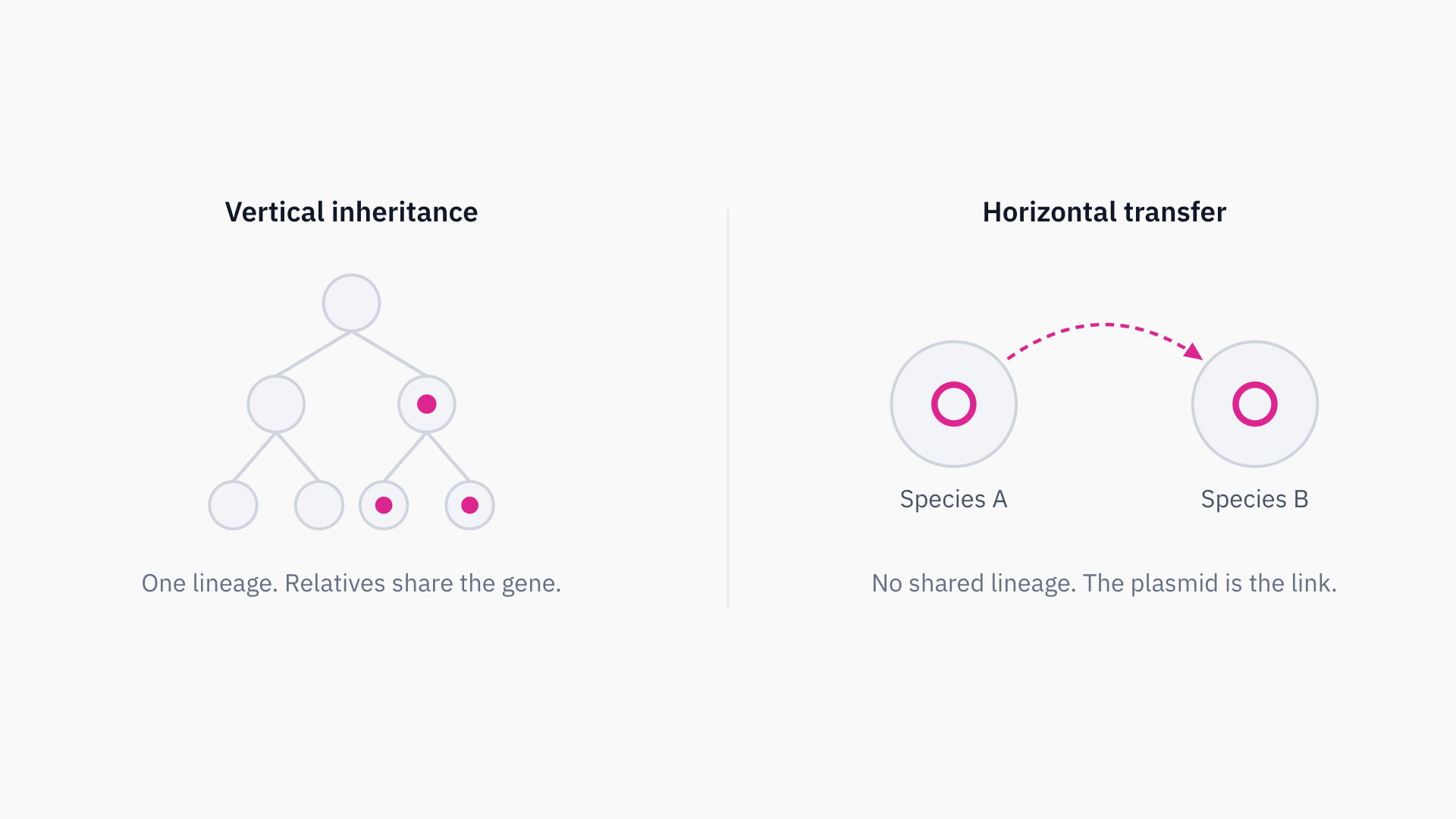
Antimicrobial resistance (AMR) is evolving faster than hospital surveillance methods can respond. Microbiology labs receive patient samples every day and move them through a familiar workflow: culture, isolate, extract DNA, sequence, run a pipeline, and interpret results. But standard pipelines miss a critical piece: plasmids that drive horizontal gene transfer. Without plasmid-aware surveillance, the consequences are dramatic: misidentified outbreak sources, incorrect isolation measures, avoidable patient-to-patient transmission, and wasted resources [1]. Solu solves this by reconstructing plasmids from raw sequencing data in real time, revealing missed horizontal gene transfer events. This article walks through the steps from sample to genomic insight and explains how plasmid-aware genomic surveillance reveals threats that are invisible to standard workflows.
Solving the plasmid puzzle
The journey toward genomic insight begins with a step that brings order to the biological chaos in a patient sample. When a sample containing millions of microbes arrives at the lab, it’s streaked onto an agar plate where a constellation of small, round colonies forms. Each colony represents a single, genetically distinct lineage separated and grown from the original cells. Typically, only one or a few colonies are selected for downstream analysis. Biological complexity is being traded off, which is also why outbreak-driving plasmids go unnoticed. Understanding the reality behind plasmid spread is the first step. Solu's platform goes further by delivering plasmid reconstruction that turns sequencing data into outbreak-stopping insights within minutes.
From raw reads to actionable insights with Solu
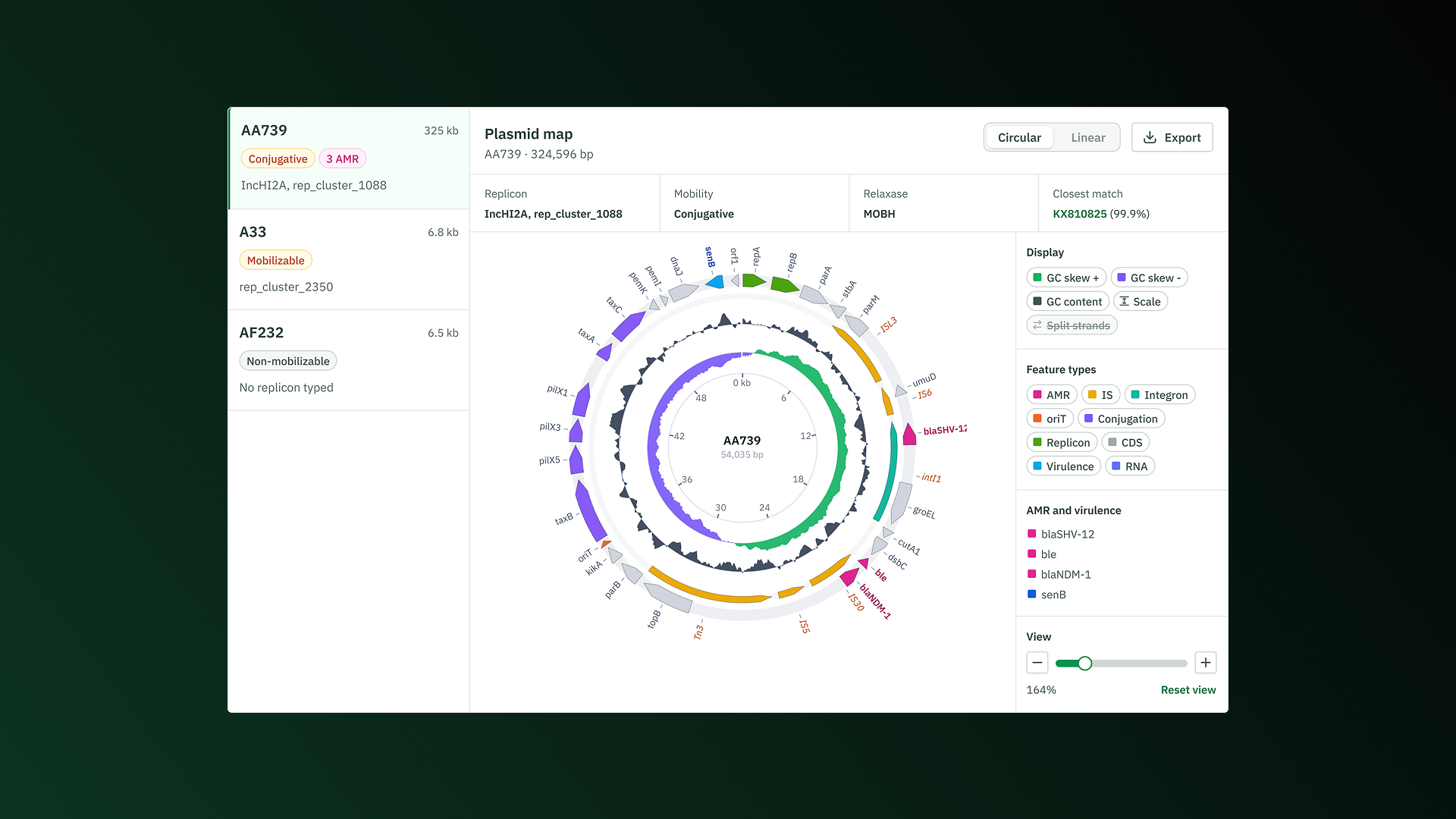
Transforming raw sequencing reads into meaningful insights is about accurate reconstruction. Solu’s platform addresses this by building on established plasmid analysis tools, such as MOB-suite. In short-read data, especially large, low-copy-number plasmid fragments, often collapse into the chromosome or disappear entirely, making them difficult for short-read plasmid reconstruction tools based on coverage differences, like PlasmidSPAdes, to recover [2,3]. MOB-suite addresses this issue by replacing coverage with plasmid identity genes as biological signatures for detection [3]. By integrating faster, more robust, and accurate genomic reconstruction methods into a cloud-based platform, Solu delivers real-time clinical insights to support critical infection-control team decisions.
Seeing the full picture - how to act now
From the agar plate to the bioinformatics pipeline, each step of the standard workflow simplifies a complex biological reality. By failing to account for this in hospital workflows, the real drivers of outbreaks can go unnoticed. The cost of inaction extends from immediate clinical hazards to long-term economic strain, with global healthcare costs from AMR projected to grow from $66 billion today to $159 billion by 2050 [4].
Sometimes AMR isn’t about the strain you’re fighting. It’s about the genes that the strain can acquire.
Implementing efficient genomic surveillance is about starting from first principles: Sometimes AMR isn’t about the strain you’re fighting. It’s about the genes that the strain can acquire. Those genes only become visible when you’re able to scan for the full picture. Solu makes plasmid-aware surveillance simple. Upload your sequencing data to our platform for complete genomic reconstruction in minutes. Hospitals from New Zealand to Norway are already using Solu to detect outbreaks faster and respond with confidence. Join in time for the shift toward plasmid-aware genomic surveillance.
References
- Solu. Why horizontal spread is overlooked in genomic surveillance and outbreak detection. https://www.solugenomics.com/post/why-horizontal-spread-is-overlooked-in-genomic-surveillance-and-outbreak-detection— Includes genomic data reanalysed from published hospital datasets.
- On the (im)possibility of reconstructing plasmids from whole-genome short-read sequencing data.
Arredondo-Alonso, S., Willems, R.J.L., et al.
Microbial Genomics (2017). DOI: 10.1099/mgen.0.000128 - MOB-suite: software tools for clustering, reconstruction and typing of plasmids from draft assemblies.
Robertson, J., Nash, J.H.E.
Microbial Genomics (2018). PMCID: PMC6159552 DOI: 10.1099/mgen.0.000206 - Solu. The Immediate Financial Impact of AMR. https://www.solugenomics.com/post/the-economic-threat-of-antimicrobial-resistance-why-immediate-action-is-critical — Includes data from WHO, OECD, and World Bank sources.
.png)