Why horizontal spread is overlooked in genomic surveillance and outbreak detection

Introduction
Falling sequencing costs and the rise of multi-drug-resistant pathogens have reshaped how hospitals approach genomic surveillance and outbreak detection. The growing volume of sequencing data has outpaced our ability to turn it into actionable insight. Most pipelines still focus on how single strains move between patients, which leads to missed horizontal gene transfer (HGT) events. This article presents a better understanding of bacterial gene transfer and shows how Solu’s plasmid-aware genomic platform can help prevent life-threatening outbreaks.
How resistance spreads
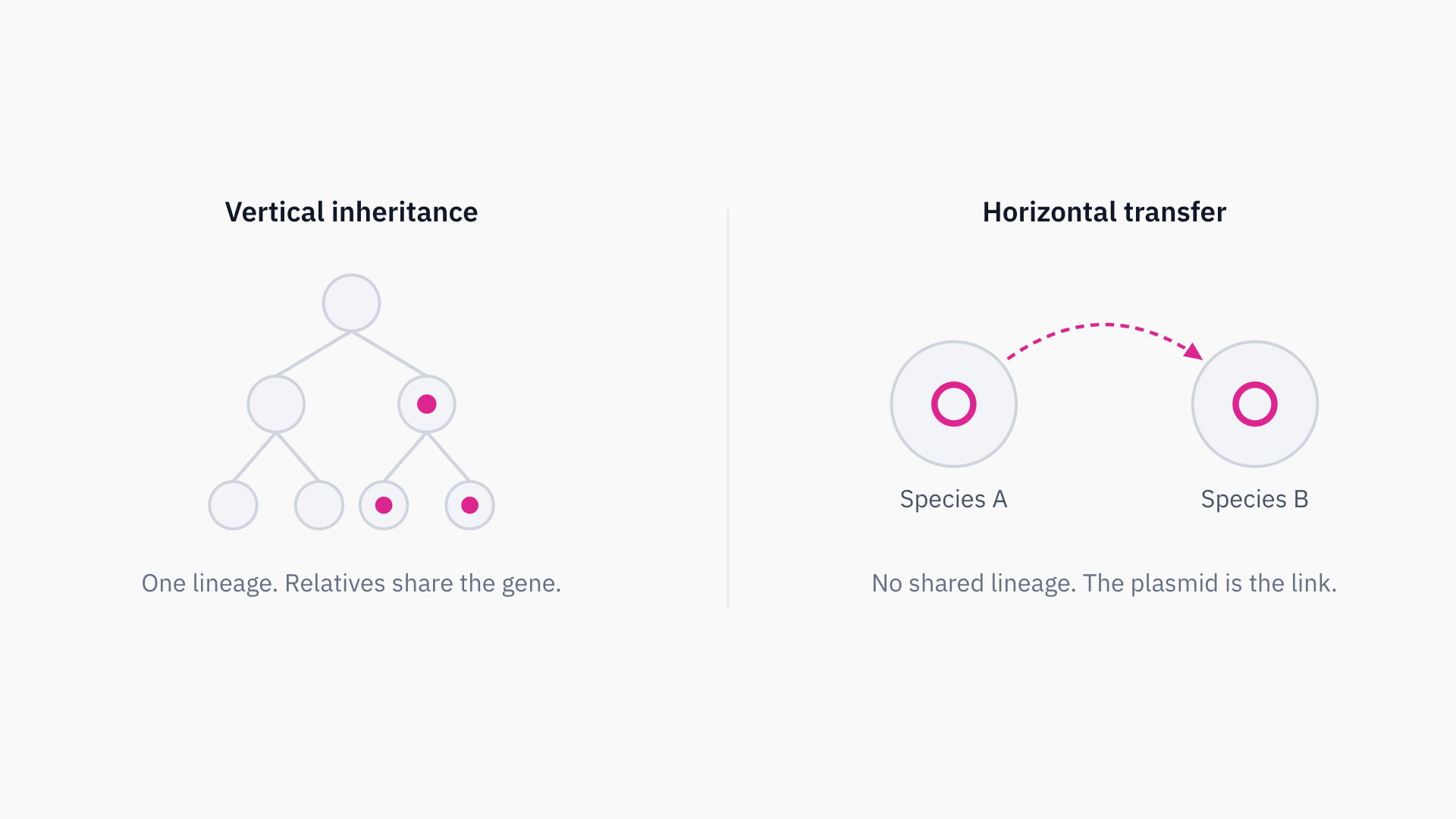
Resistance spreads in two main ways: clonal and horizontal, but most surveillance systems only focus on the first. In clonal spread, genes move through a single strain through rapid division, making it easier to detect and track with traditional hospital surveillance methods. Horizontal spread allows unrelated strains to exchange antimicrobial resistance (AMR) and virulence factor genes mainly through plasmids, leading to new, more resilient strains. Horizontal transfer is harder to monitor because it requires data from multiple clusters. Distinguishing between clonal and horizontal spread is essential for understanding AMR prevention and highlights the need for better plasmid-focused surveillance.
"Three out of four [isolates] carried mobilizable plasmids, and nearly one-third contained conjugative plasmids"
Why it matters
Insights into plasmid-driven resistance are changing the rules of outbreak management, identifying transmission pathways that clonal tracking can’t detect. In a Solu reanalysis of 94 hospital isolates, three out of four carried mobilizable plasmids, and nearly one-third contained conjugative plasmids that were not recognized in the original studies. Moreover, AMR genes were found in a majority of the plasmids, and shared plasmids between unrelated strains indicated missed HGT events [1]. These findings highlight the need for comprehensive surveillance systems and reveal that the real threat often lies in the movement of genes between strains, not in the strains themselves.
Plasmid-level insights are reshaping infection control. Clonal spread can be contained through cohorting, but plasmids move between strains and persist in the hospital environment after patient transmission has ended. Novel strains make infections harder to combat without efficient surveillance. For clinicians, antibiotic use without surveillance can create dangerous selection pressures that favor the proliferation of bacteria carrying AMR plasmids, amplifying resistance development. Plasmid spread calls for changes in control protocols, such as targeted disinfection of contaminated equipment and more careful antibiotic prescribing in line with hospital guidelines.
The cost of inaction can be severe, as highlighted in a recent Solu review: resistance-driven infections are twice as expensive to treat as susceptible ones, with patients spending an average of 7.4 additional days in the hospital and facing a nearly 50% higher risk of readmission [2].
Genomic surveillance in action
Understanding the impact of plasmid-mediated resistance highlights the need for new surveillance methods. Current pipelines rely on mapping reads to a reference genome, which forces mobile genetic elements into predefined structures. This approach falls short of recognizing the unpredictable movement of plasmids and horizontally transferred genes required for efficient HGT surveillance.
Solu offers a new standard for genomic surveillance with a cloud-based, drag-and-drop platform designed for real-time de novo genome assembly. Our pipeline directly reconstructs bacterial chromosomes and plasmids, turning raw reads into plasmid-aware insights within minutes. Solu provides read-quality assessment, annotation of AMR genes, and visualization of shared ancestry with SNP-based phylogenetic trees.
Solu aims to prevent epidemics with genomics and support healthcare professionals with reliable data. Implementing horizontal spread detection is a crucial step toward better outbreak management. Solu’s mission is to make that process faster, clearer, and more actionable. As hospitals face increasing pressure from evolving pathogens, efficient genomic surveillance can help make the shift from containment to prevention. Partner with Solu to ensure your team is ready to face the growing threat of drug-resistant infections.
References
1. Solu. Plasmid analysis reveals potential horizontal gene transfer events in hospital-associated infections. Jonatan Lehtinen.
— Includes genomic data reanalyzed from three published hospital datasets originally cited in the study.
2. Solu. The Immediate Financial Impact of AMR.
— Includes data from WHO, OECD, and World Bank sources.